M.E.A.T. GmbH — Meat, Education, Ambition, Travel

Surgical Techniques · Surgical Specialization · LEH

Cutting Meat Properly – Cutting Techniques in Food Retail

Systematic Approach Instead of Randomness at the Workbench: Understand the anatomy, read the grain, choose tools deliberately, and make every cutting decision transparent all the way through to the final application.

This industry-specific program brings career changers, counter staff, and supervisory personnel up to a reliable standard for beef, pork, and veal. Developed in collaboration with WBC World Butcher Champion Jörg Erchinger.

FormatProject-Based Professional Qualification
FocusBeef · Pork · Veal
PracticeCounter · Cutting · Consultation
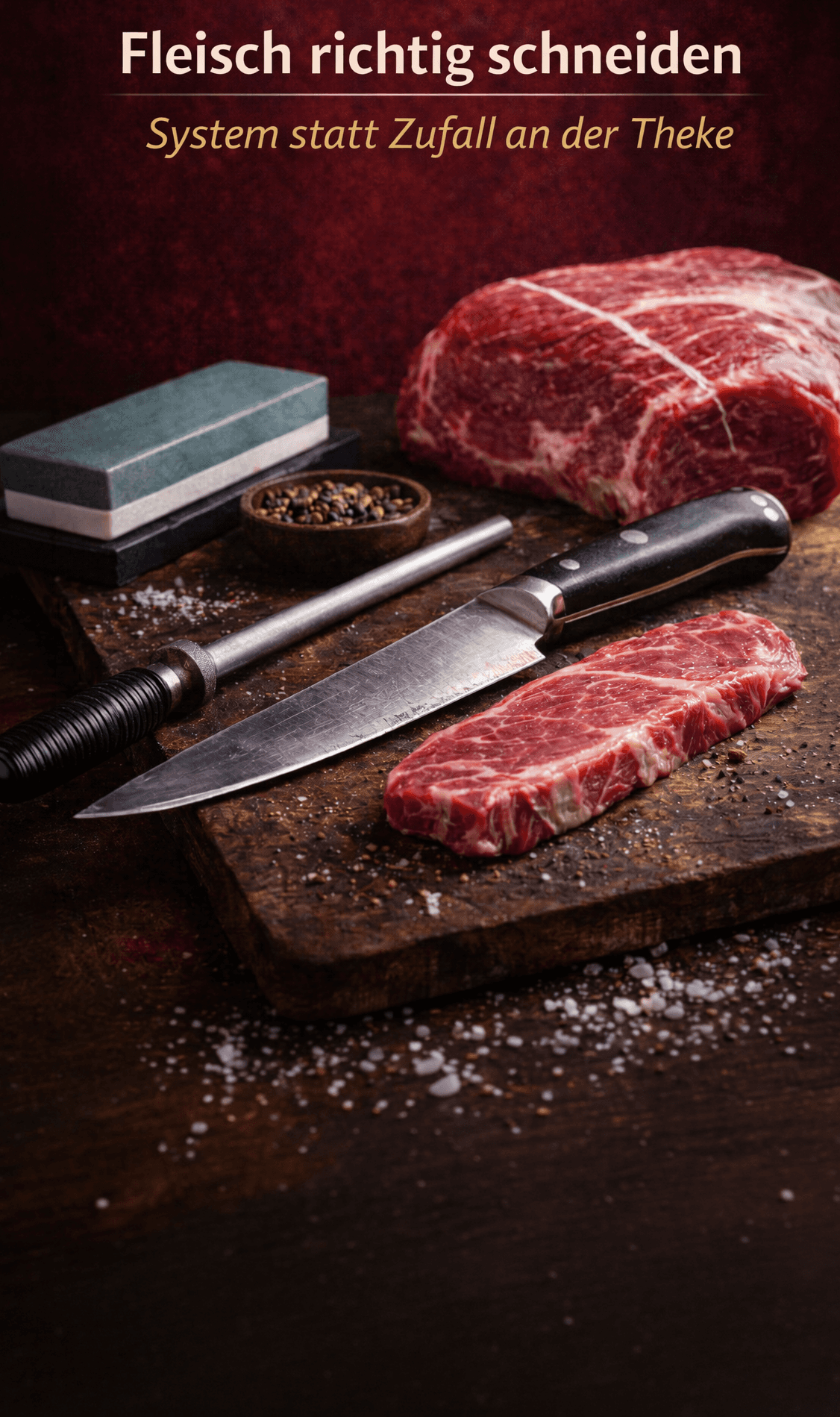
Meat, Knives, and Sharpening Tools: The Basics of Professional Cutting Techniques in the Food Retail Industry
Product StructureKnife GuideSharpening Tool

Why "Schnittlogik"?

Good products alone do not guarantee a good result.

In the food retail sector, cutting is done every day, but it’s rarely taught systematically. This is exactly where costly mistakes occur: incorrect cutting direction, uneven portions, unnecessary waste, unappealing appearance, and improperly used or dull knives.

The training program combines knowledge of meat, tool proficiency, and practical application. This makes decisions transparent, processes repeatable, and results more consistent within the team.

Designed for grocery store teams: clear language, cutting logic that can be implemented right away, and a clear connection between tenderness, portion size, product appearance, and tools.

Cut Logic Navigator

Six decisions. A robust cutting logic.

Select a step. Each section shows what needs to be identified, decided, and put into practice, as well as the resulting impact.

01

Read this section

Anatomy

The back, leg, and shoulder follow a specific cut and muscle structure. Anyone who understands this logic can prepare basic cuts in a logical manner.

Recognize

Be mindful of muscle structure, transitions, and the placement of high-quality cuts.

Decide

Determine where a basic cut ends and what portions can be made from it.

Practice

A systematic approach to beef, pork, and veal—instead of trial and error in day-to-day market operations.

Result

A clearly understood basic pattern forms the foundation for every subsequent cutting decision.

Next step: The visible grain pattern determines the cutting direction.
AnatomyFiber OrientationToolCutting PathPortioningApplication

Specialized Modules

Individual topics come together to form a workbench.

Each area combines technical classification, informed decision-making, and concrete practical impact. In this way, individual pieces of knowledge are transformed into a consistent workflow for the counter and cutting areas.

01

Career changers

Learn the basics: grain direction, cutting direction, and portioning—explained clearly and without technical jargon.

02

Bar staff

Present the product and portion sizes consistently, clearly explain the cuts, and convey the preparation and nutritional value in a way that is easy to understand.

03

Department Head

Establish consistent standards: fewer errors, fewer losses, and fewer disagreements within the team.

04

Market and Project Managers

Think economically: Reduce waste, improve premium appearance, and lower the number of complaints.

Team Training

Clearly position cutting technology in the market.

Portioning, product presentation, special cuts, and knife skills are combined into a unified standard that is tailored to the company, the target audience, and operational practices.

Discuss Training for Your Team