M.E.A.T. GmbH — Meat, Education, Ambition, Travel

Keynote Speeches and Technical Presentations

Professional insights that provide guidance.

Ronny Paulusch discusses meat quality, product knowledge, vocational training, and the resulting decisions for the trade, retail, and organizations.

Discuss a speaking engagement request
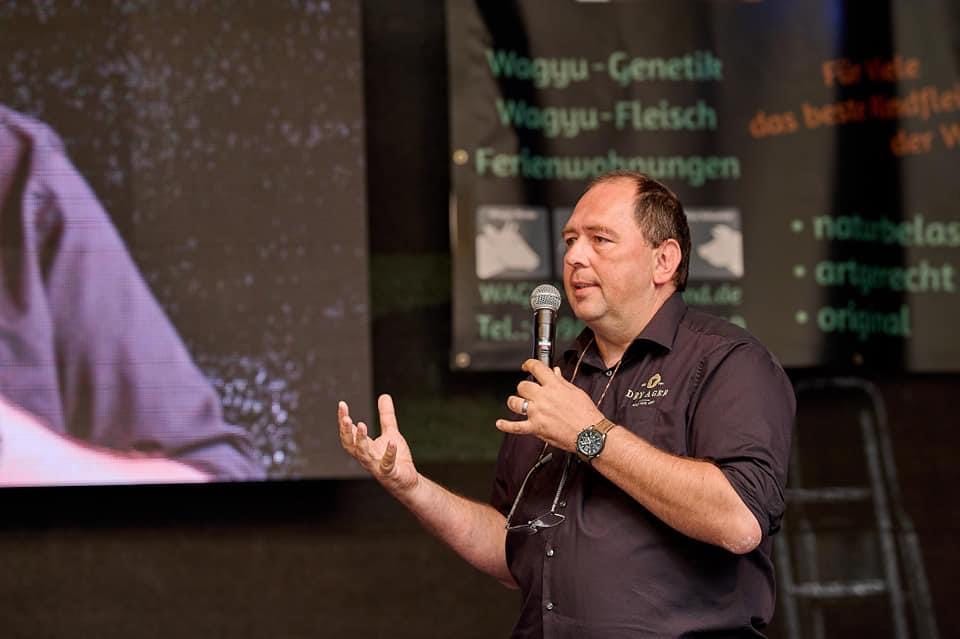
Ronny Paulusch giving a presentation on stage

No motivational speeches and no simplistic, one-size-fits-all solutions. The focus is on logical connections, clear perspectives, and insights that have a lasting impact beyond the presentation itself.

Keynote speeches provide direction and sharpen perspectives. They bring broader contexts—rather than isolated aspects—into the discussion—all grounded in expertise, verifiable, and practical.

Topics with a Point of View

Four Perspectives.
Specific technical questions.

The presentations combine expert knowledge with practical business and teaching experience. The focus is tailored to the questions that matter most to your audience.

Meat quality isn't just a gut feeling

Meat quality results from a combination of product knowledge, aging, sensory evaluation, preparation, and traceable criteria. This presentation explains why quality must be objectively assessed and not merely claimed.

Quality assurance and standards combine practical experience with verifiable benchmarks.

For the skilled trades, the food industry, and food retail—at trade conferences and industry events.

Between Trend and Substance

New developments attract attention. What matters, however, is which of them are technically sound, work in practice, and have a long-term impact. This presentation categorizes trends and compares them against reliable benchmarks.

Responsibility and quality are linked to systems, processes, and decisions: What are the expectations—and what is actually feasible?

For associations, executives, and key decision-makers—at strategy sessions and industry gatherings.

Knowledge alone is not enough

Vocational training is not effective simply by covering as much material as possible. What matters most is what people are subsequently able to understand, decide, and apply.

Practice and theory, a focus on competencies, learning guidance and structure, and didactic adaptation all go hand in hand—for continuing education that makes a difference.

For schools, academies, educational institutions, and teachers, as well as those responsible for vocational training and continuing education.

The Future of the Trades

The future of vocational training depends on in-depth technical knowledge, clear instruction, clear quality standards, and the ability to apply that knowledge to real-world workplace situations.

Expertise and responsibility, quality and reproducibility link education, business, and the market. Clear positions replace arbitrariness.

For association and guild events, educational institutions, industry professionals, and opinion leaders—also as a kickoff or closing event.

Occasion and Audience

A spark in the right setting.

From professional events and conferences to industry gatherings and association meetings, all the way to internal corporate events and strategy sessions: the topic and depth are tailored to the occasion.

Educational institutions and training providers, executives and decision-makers, as well as industry professionals and opinion leaders, will all find points of connection—at educational and continuing education events, at opening and closing ceremonies, and during panel discussions and expert panels.

Keynote: 30–45 minutes

A clear, professional highlight for an opening, closing ceremony, conference, or association meeting.

Specialized Presentation: 45–90 Minutes

In-depth subject-specific analysis for professional events, internal events, strategy sessions, and continuing education contexts.

Replacement ( Optional) Afterward

A moderated or expert-led discussion provides an opportunity for questions, discussion, and contextualization within the specific event setting.

Languages of the presentations: German and English.

Ronny Paulusch

Bringing professional expertise to the stage.

International professional and teaching experience is combined with expertise in the skilled trades, the food industry, education, and product knowledge. As an author and specialist writer, Ronny Paulusch brings together experience, expertise, and a structured approach.

Complex topics are explained in a precise and understandable way—without oversimplifying them. The goal is not merely to elicit applause, but to inspire lasting reflection, discussion, and action.

More about Ronny Paulusch

Stage experience

Speaker at the Wagyu Gala

Host of the 2024 Saxon Barbecue Festival

Speaker and expert presenter at trade shows and industry events both in Germany and abroad.

Preparation, Performance, and Exchange

A clear message.
Not your typical presentation.

Professional, personalized preparation results in a clearly focused presentation. A good presentation doesn't provide answers to everything—but it does ask the right questions.

  1. Clarify the context and reason

    What event is coming up, and in what context is the presentation intended to be given?

  2. Understanding the Goal and Audience

    The objectives, the audience, and the audience's professional perspectives form the starting point.

  3. Define the central question and focus

    What is the goal here? A clear structure and a common thread hold the technical content together.

  4. Tailor the presentation to the event and target audience

    The content, scope, duration, and framework are tailored to the occasion, target audience, and context.

  5. Deliver a presentation and open the discussion

    The precise, clear, and well-reasoned introduction provides a framework for the discussion. Follow-up questions and contextual analysis open up new perspectives.

  6. Assess the long-term impact and potential for further professional exchange

    These insights lay the groundwork for decision-making and provide starting points for practical application—beyond the moment of the presentation.

Scope and Request

What do you want your audience to take away from this?

During the initial consultation, we discuss the occasion, audience, objectives, topic, language, and time frame. This information is used to develop a presentation that is tailored to the context of the event.

We will work together to determine whether a presentation is appropriate and, if so, in what format. Keynotes and technical presentations are not sales events and are not intended to replace training or consulting. The discussion that follows is also not a workshop.