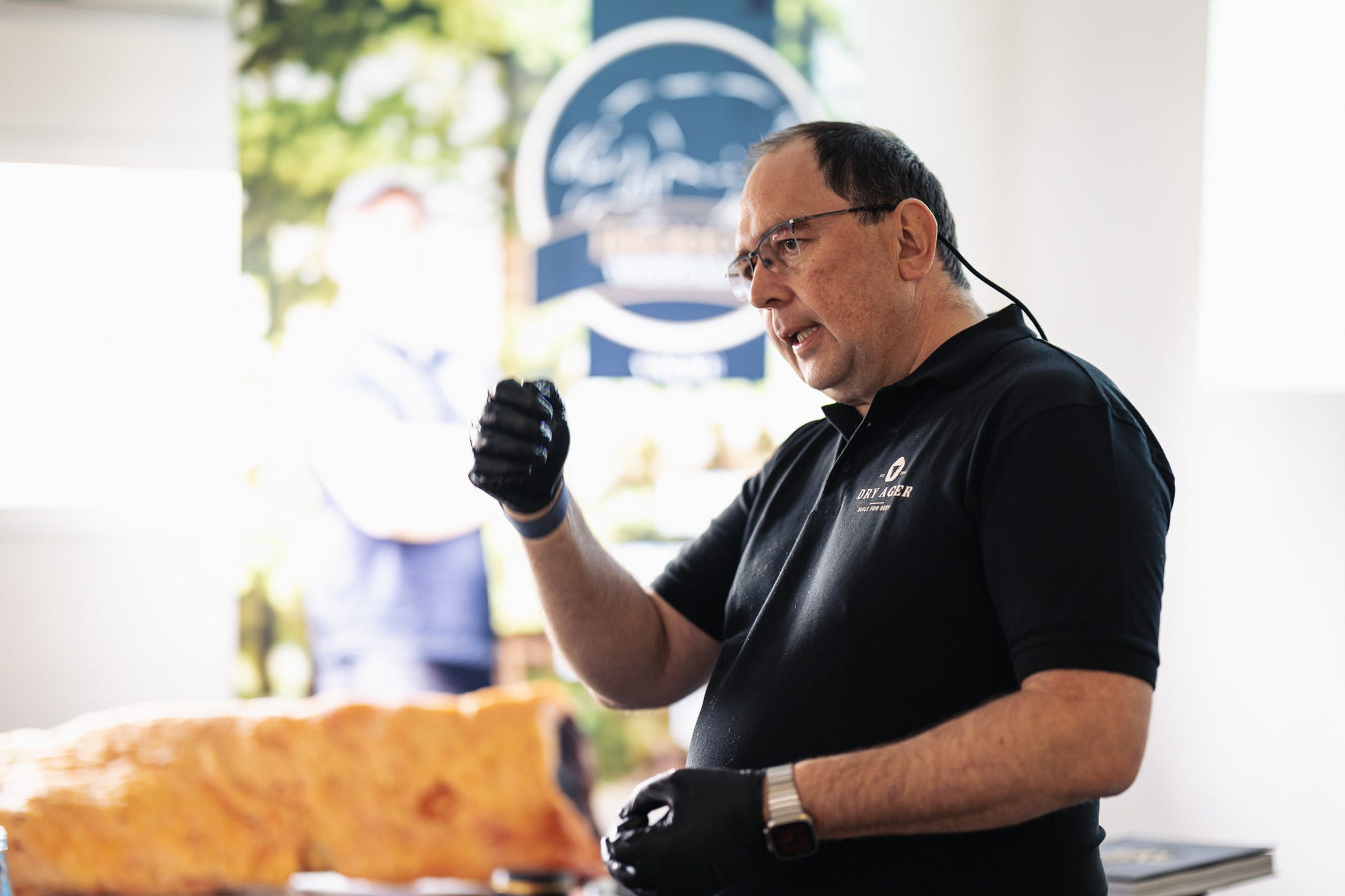
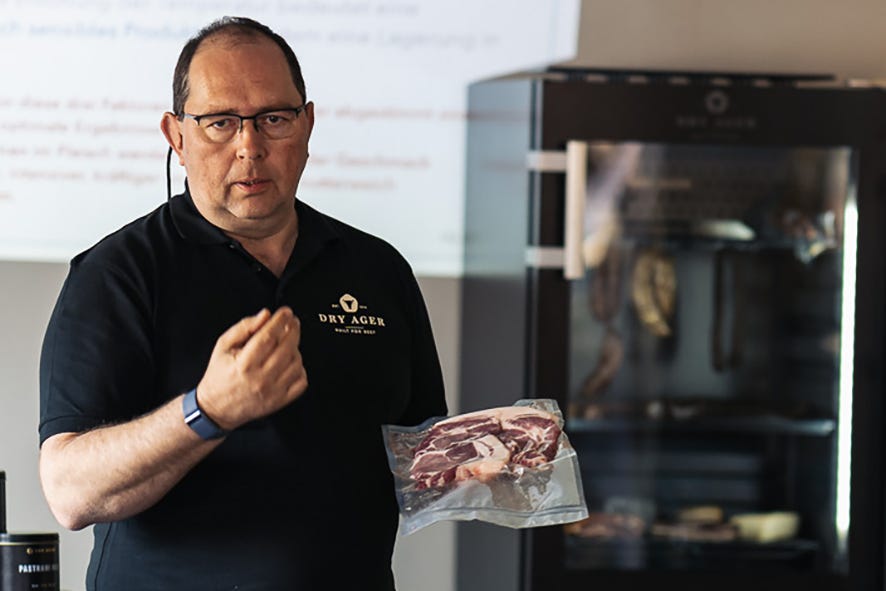
Expertise only becomes valuable when it is put into action.
M.E.A.T. develops and conducts hands-on workshops for companies, teams, and professionals in the meat industry. Participants work with real products, address specific issues, and achieve results that can be directly applied in practice.
A good workshop doesn't start with a ready-made slide presentation, but with a genuine question. What needs to be understood, changed, developed, or mastered?
The result is a focused learning format that combines expert knowledge, sensory perception, and practical application. It’s not just about listening—it’s about doing, thinking, and understanding in a small group.
Two Entrances
A format for shared tasks and specific deadlines.
01
For Businesses and Partners
The workshop is based on your assignment.
The team, product, operations, and desired outcome determine the technical design. The event can take place at the company’s premises or at a suitable venue.
Individual Academic Assignment
Tailored to Participants and Real-World Work Situations
Would you like to explore a topic in depth through hands-on activities, evaluate products together, and gain new perspectives for your work? Let us know what interests you. We’ll determine which workshop format is the best fit.
The process begins with a specific technical or operational issue. This issue determines what will be worked on and what outcome is relevant for the participants.
BackgroundThe process begins with a specific technical or operational issue. This issue determines what will be worked on and what outcome is relevant for the participants.
ObservationProducts, processes, and differences are examined together. Perception and technical criteria create a solid foundation.
ApplicationExpert knowledge is applied directly to the product or to a real-world work situation. Theory serves as a framework, not as an end in itself.
Joint EvaluationObservations and work results are compared in a transparent manner, discussed, and evaluated from a professional perspective. The exchange takes place on an equal footing.
TransferThis collaborative work yields concrete starting points that can be further utilized in the workplace, in teaching, or in everyday professional life.
Professional Fields
Topics are addressed through hands-on activities.
The product and the specific work situation are the focus. Expert knowledge provides guidance, sensory perception sharpens observation, and practical application leads to knowledge transfer.
01
Crafts
Products and work steps are not only explained, but also explored together through hands-on activities.
Cutting and Disassembly
Aging and Processing
Special Techniques
02
Product and Sensors
Perception is linked to clear criteria so that differences can be classified in a professional manner.
Comparative Reviews
Defect Patterns and Deviations
Quality Criteria
03
Application
Insights are applied in counseling, presentations, and real-world professional situations.
Consulting and Presentation
Sales and Consumption Formats
Event and Practical Application
Letter-to-Transfer Flow
A request becomes a robust working format.
The process remains transparent, without prejudging the outcome. Each decision is based on the context, the participants, and the professional objective.
What Remains
A workshop doesn't end with the last slide.
Shared technical understanding
Transparent Evaluation of Products or Processes
Findings That Can Be Applied Immediately
Specific areas of focus for future work
Professional Exchange on Equal Terms
Technical Director
Ronny Paulusch
Ronny Paulusch leads the workshops himself. As an internationally active expert instructor, consultant, and developer, he combines in-depth expertise with clear, practical teaching.
Qualification
Certified Meat Sommelier
Key Areas
Meat Quality, Sensory Evaluation, Aging, and Product Knowledge
Experience
Many years of experience working with technical schools, companies, and professional participants
Common Starting Point
What issue should we work on together?
Briefly describe the occasion, the target audience, and the desired outcome. This will help determine whether—and in what form—a joint workshop would be appropriate.