Format 01
Technical articles for industry publications
Technical issues, developments, and controversial topics are contextualized, reviewed from a technical perspective, and linked to clear, practical examples.
Ronny Paulusch · Professional Publications
Expert knowledge is reviewed, organized, translated into clear language, and made ready for publication.
Author and media relations are an essential part of M.E.A.T. GmbH’s professional activities. They organize experience, make connections clear, and translate complex content in a way that makes it useful for businesses, schools, and organizations. This includes professional articles, columns, book projects, and contributions in various media formats—always with the goal of combining precision with practical relevance.

What the Work Stands For
Professional publications are more than just supplementary communication. They provide guidance, set standards, and make knowledge accessible—for the skilled trades, the food industry, and continuing education.
Good writing means thoroughly verifying statements, using terms clearly, and structuring content in such a way that it can not only be read but also put into practice. This is precisely what builds trust: because the content is reliable—even under real-world conditions.
Format Navigator
Form follows function: Knowledge is structured, verified, and prepared for integration based on the specific context of use. Select a predefined format.
Format 01
Technical issues, developments, and controversial topics are contextualized, reviewed from a technical perspective, and linked to clear, practical examples.
Format 02
A consistent editorial perspective combines current issues with experience, conceptual precision, and a clear stance.
Format 03
Complex subject areas are systematically explored, organized for educational purposes, and developed into a reference resource that can be used over the long term.
Format 04
Terms, examples, learning steps, and application exercises are combined into a clear learning structure.
Format 05
Responses and key messages are precisely tailored to the occasion, medium, and target audience without compromising on technical substance.
Format 06
Complexity is reduced for video and short-form content without distorting the context or resorting to mere buzzwords.
Selected Format: Trade Article for Industry Publications
Effect
Publication ensures longevity: Knowledge becomes verifiable, citable, and applicable.

Publications & References
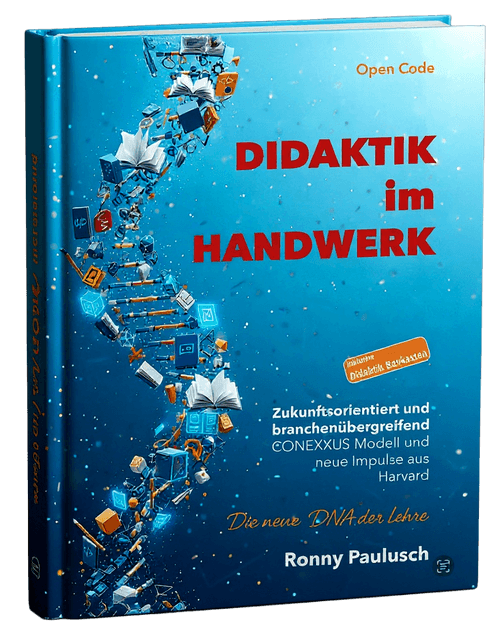
Book projects and reference works are just as much a part of an author’s work as specialized excerpts and articles. The published book *Didactics in the Trades*, subtitled *New Impulses from Harvard—The New DNA of Teaching*, is presented in detail, including its background, content, and where to purchase it.
Workflow
The editorial work follows a clear logic. Select a step to read about its documented focus.
Step 01
Relevance, Need, Practical Issues, Controversies.
Step 02
Complex concepts explained in a practical way.
Step 03
Facts, plausibility, precision of terminology.
Step 04
Precision, rigor, clarity.
Step 05
A common thread, examples, clear terminology.
Step 06
Available for businesses, schools, and partners.
Selected Step: Identifying a Topic
Technical Context
Thematic, the work of authors and media professionals bridges two areas: practical skills and food industry practices, as well as modern education and continuing education. Topics range from meat quality, aging, sensory evaluation, and preparation to instructional design, competency-based learning, and the development of effective educational formats.
This creates an interface between the product, practical application, and communication—precisely formulated and consistently designed for practical use.
Framework for Cooperation
Our work with authors and the media is project-based, ranging from individual specialized articles to large-scale publication projects. The scope, timeline, and compensation are determined by the project’s objectives, responsibilities, and complexity. We prioritize professional collaboration with clear communication channels and consistent quality.
After a discussion about the objectives, context, and expectations, we assess whether and in what form author and media relations efforts would be appropriate.