
Marbling
How fine are the fat strands? Are they evenly distributed, or do they cluster in certain areas? The profile documents the visible pattern within the selected muscle.
Sensory-ID™ · International Meat Sensory Program
The IMSP training standard for the visual assessment of meat cuts.
In a ribeye, finely marbled lean meat, a wide layer of fat, and edge fat are closely packed together. The first step is to select the cut of meat that allows you to assess the marbling.
The Method
One person sees a thick layer of fat, while another sees the many fine veins of fat in the adjacent muscle. Both are describing the same ribeye. Only once the area under examination has been defined can it be determined whether their assessments actually differ.
The Cut Surface Profile, developed by Ronny Paulusch for Sensory-ID™, brings together the image location, observation, and findings. The analysis suggests a section. In the IMSP, participants learn to verify its anatomical location, correct it if necessary, and justify their decision.
Documented Course Sample · CSP-3
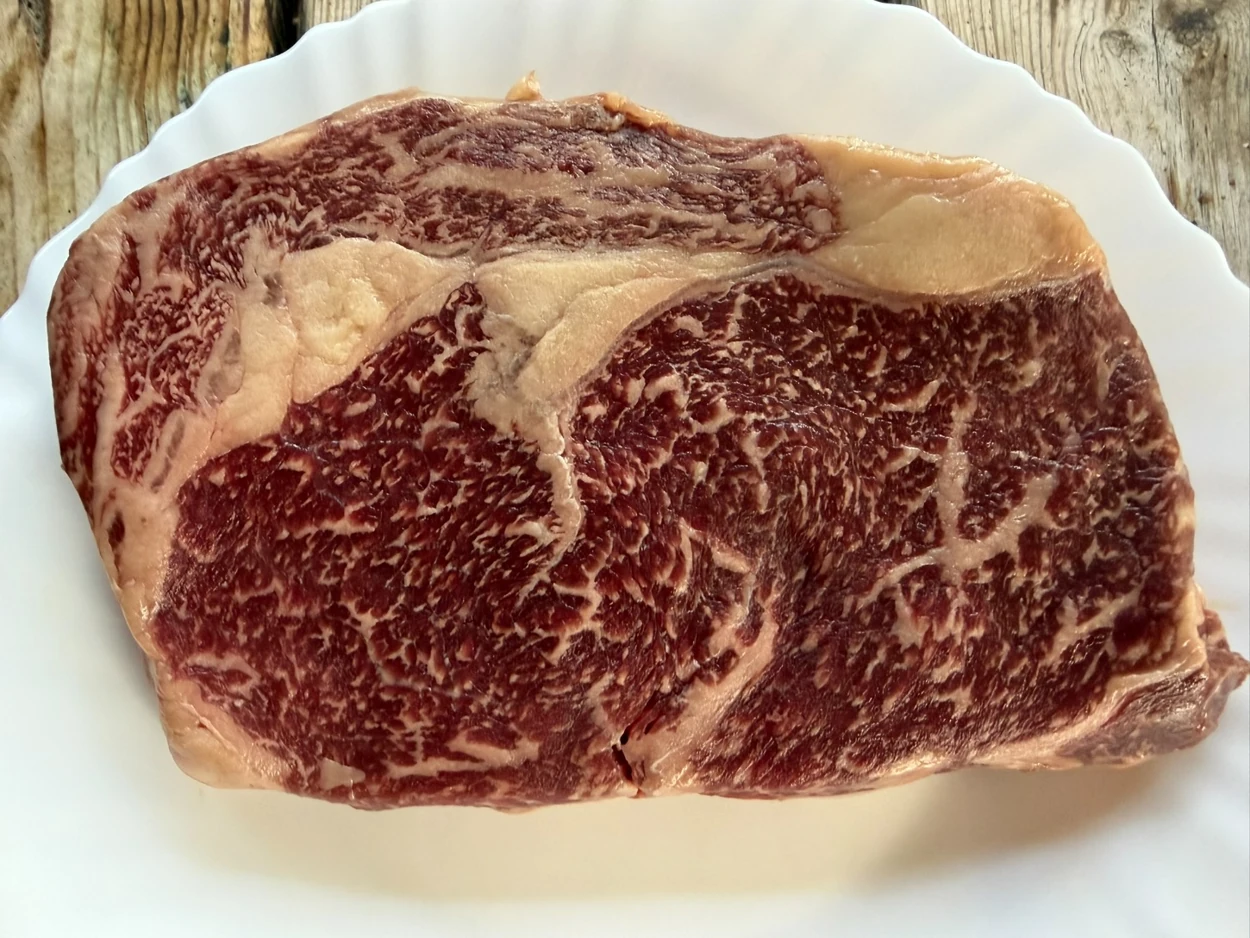
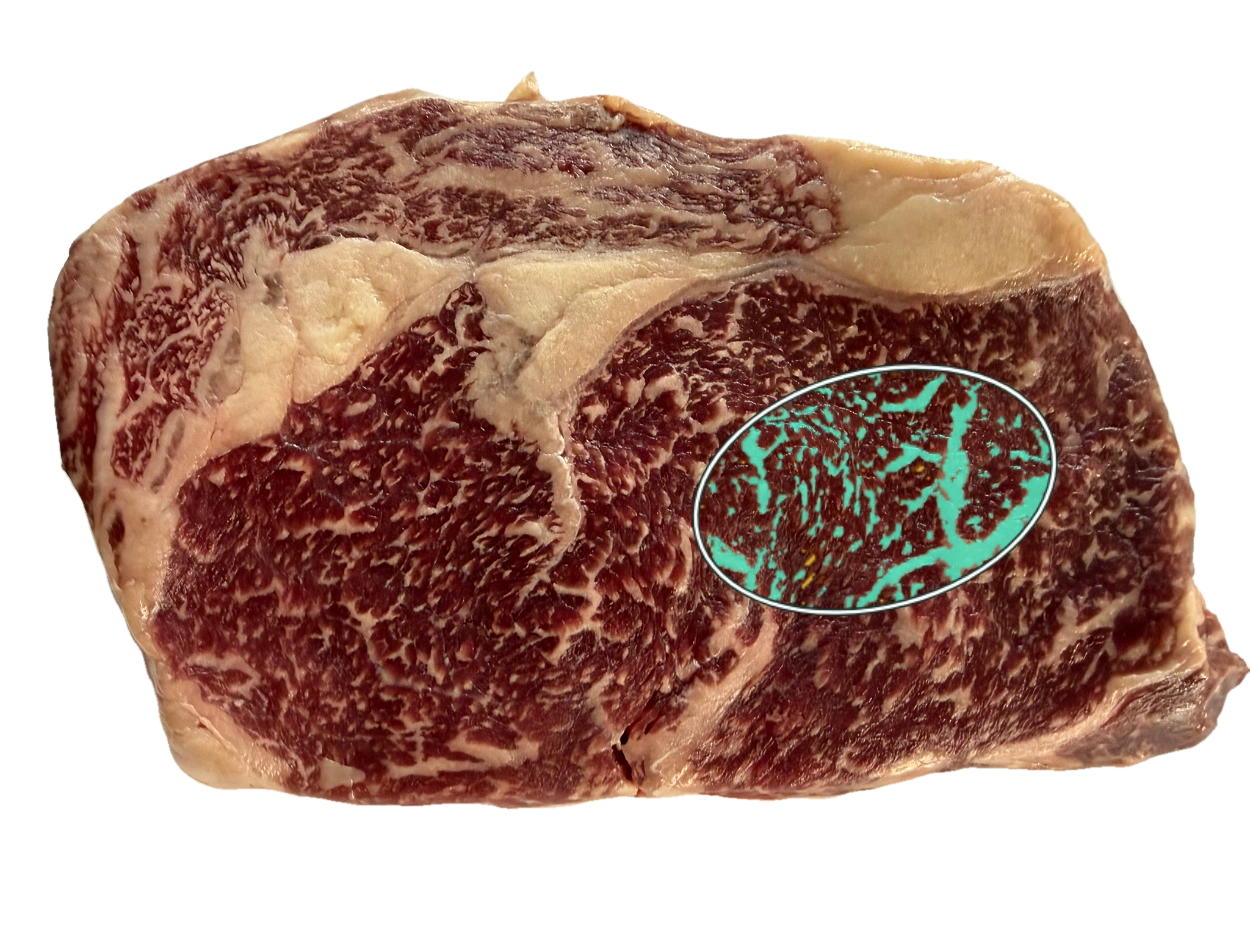
The wide, light-colored fat line can be traced across the cut. Just below it on the right is a large, continuous area of muscle. The test area for CSP-3 was marked in this part of the ribeye.
The wide fat seam and the edge fat lie outside the ellipse. The area percentage applies to the highlighted section of this image.
Cut Profile
How fine are the fat strands? Are they evenly distributed, or do they cluster in certain areas? The profile documents the visible pattern within the selected muscle.
A light-colored line may be a tendon or connective tissue. Marked structures and areas of uncertainty can be excluded from the area estimation. The report documents the expert visual assessment separately.
The color is described in the original photo. The suggestion can be corrected from a technical standpoint. For a direct comparison, two close-ups from the same photo taken under consistent lighting are ideal.
From Cutting to Tasting
A new entry is added to the image pool with details on the animal species, cut, breed, origin, and feeding regimen. If a photo has already been uploaded for the scored tasting, it can be selected directly from the sample.
The individual profile brings together the photo, tasting ellipse, visible marbling, texture observations, and color. Using the SID, it can be reassigned to the sample even after the tasting.
Technical Classification
The reference value is the evaluable image area within the selected ellipse. In CSP-3, the structures identified as possible fatty streaks account for approximately 26% of that area. A newly defined test area results in a new evaluation.
IMF stands for intramuscular fat. A corresponding lab value indicates the fat content of the sample being tested as a percentage by weight. An IMF range in training is a hypothesis. It is not possible to determine the weight percentage of the steak based on the 26% of the image area.
During training, the Japanese Beef Marbling Standard scale serves as a visual reference. Visual similarity can be determined based on the intensity, fineness, and distribution of marbling. The CSP does not assign an official BMS rating.
In the IMF-X™ assessment, marbling is one of several evaluation criteria. The CSP provides a documented observation of this at the cross-section. Fat-melting behavior and texture integrity require separate findings.
Access to the digital application
Access to the CSP application in Sensory-ID™ is reserved exclusively for authorized IMSP participants and graduates. You can document your own samples on a tablet or desktop, compare two sections, and generate a PDF report. The methodology is being further developed based on these documented course cases.