M.E.A.T. GmbH — Meat, Education, Ambition, Travel

Licensable B2B educational format

Master the technical aspects of ham production and dry curing.

A classroom-based training format for barbecue and cooking schools, vocational schools, academies, and companies. Concise digital preparation and an intensive hands-on day combine an understanding of ingredients, process management, sensory evaluation, and product quality.

Classify the format for your organization
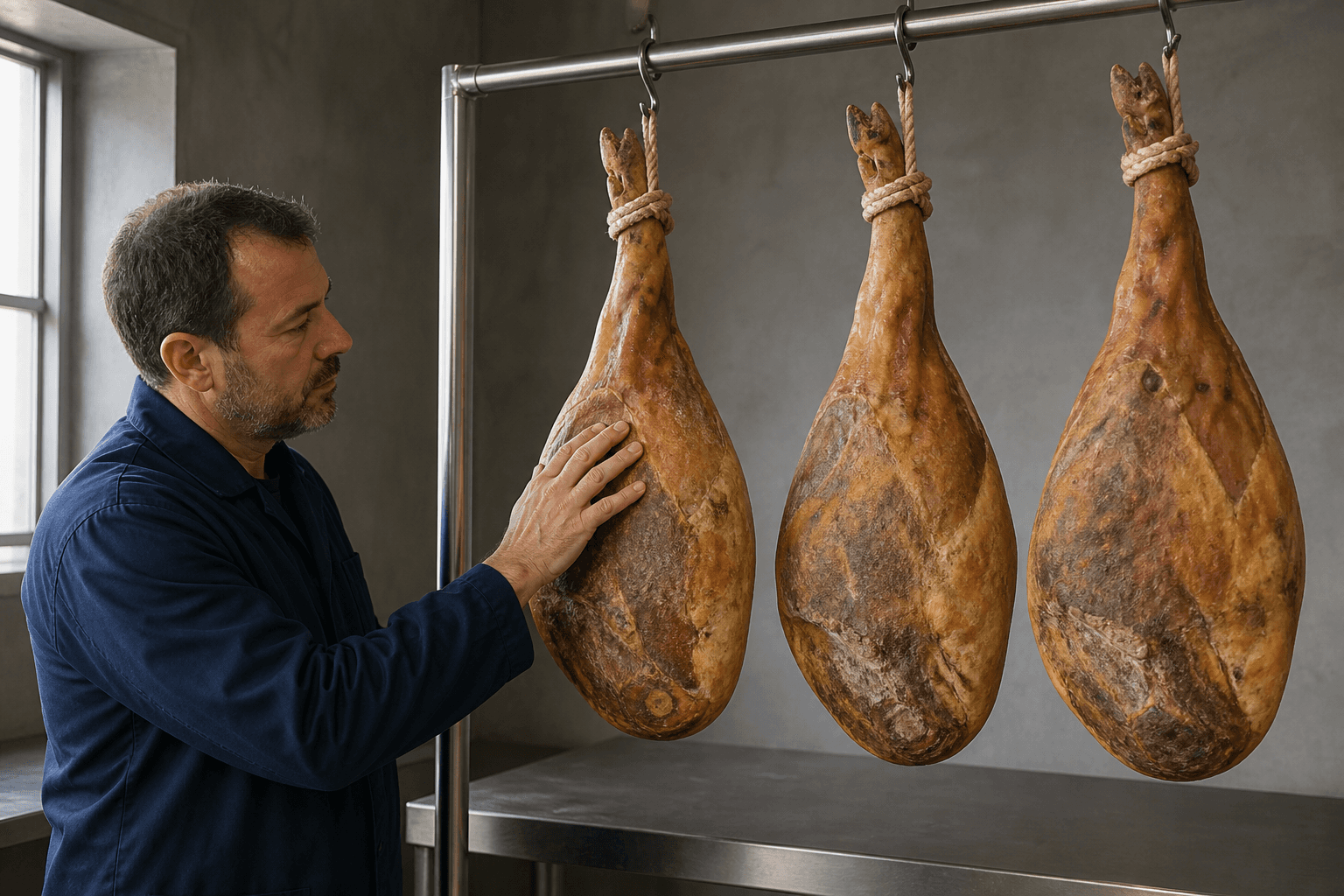
An expert examines the surface of one of three raw hams hanging from a hook
Editorial stock photo.

M.E.A.T. develops and licenses the program. Implementation partners use it for their participant groups.

Compact digital preparation and an intensive, expert-led hands-on training day.

Raw Materials · Salt · Aging

From raw material to finished product.

Ham production is about process management, not just knowing the recipe. Raw materials, salt, time, air, and smoke all interact—ensuring a traceable curing process and reproducibility.

Read the source material

Pork, beef, and game differ in texture, fat content, and consistency. Suitability, surface condition, and cut determine the potential outcome—and set limits on expectations.

Defects in raw materials, their subsequent consequences, and the adaptation of game processing to the raw material are discussed from a practical perspective.

Understanding Salt Transport

Diffusion, salt content, time, reddening, and equilibrium are considered together. Dry curing is approached in a structured manner, with an emphasis on practical handling and control.

Identifying discrepancies, classifying them according to their subject matter, and determining appropriate corrections combines understanding with application.

Managing the Aging Process in a Controlled Manner

Temperature, airflow, time, and water activity are interrelated. A distinction is made between stable and fluctuating conditions, surface development, and protective mechanisms.

The process determines which documentation is necessary and which is optional: What supports evaluation and reproducibility?

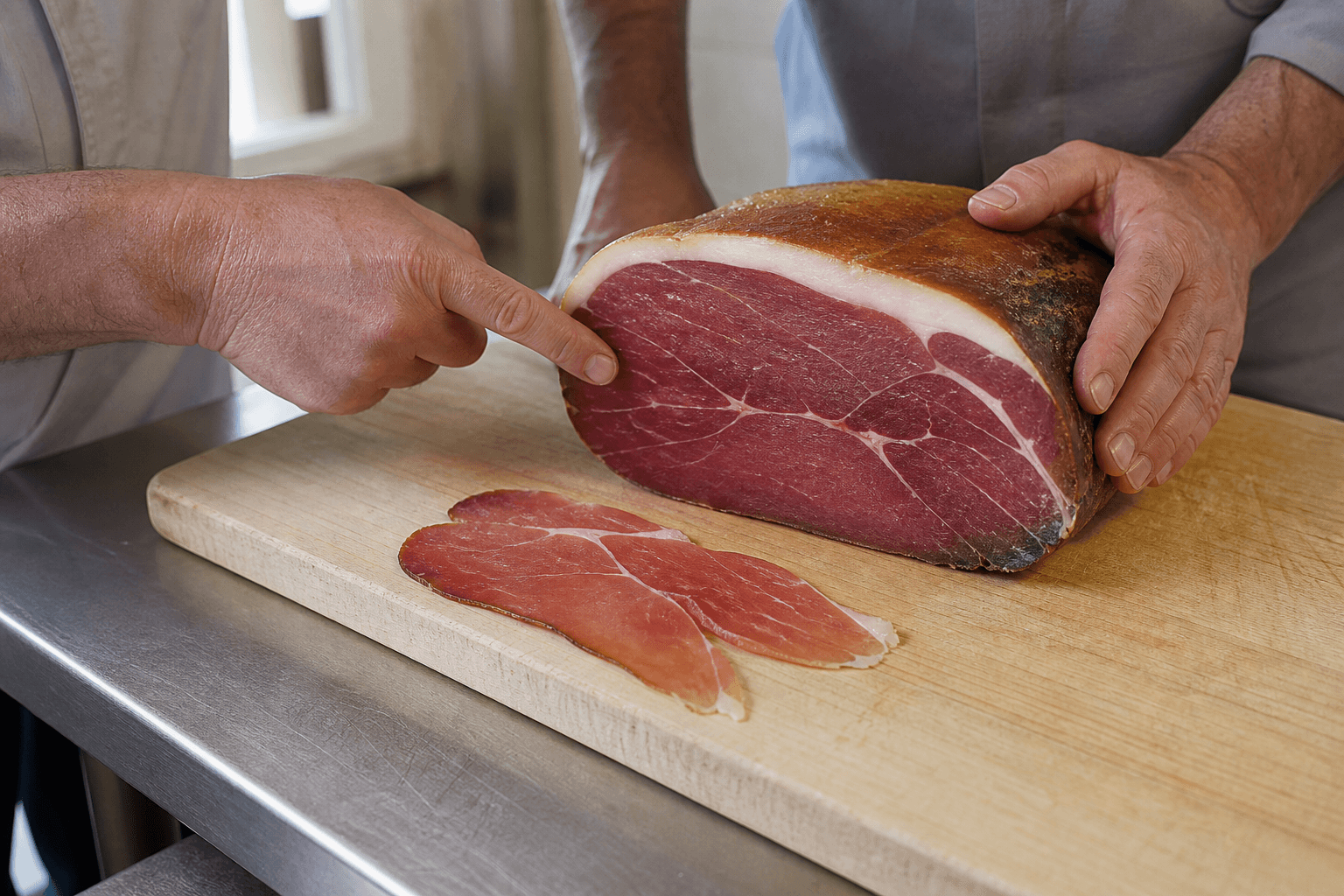
Hands are examining the cut surface of a cured raw ham with a layer of fat on a cutting board
Cut surface, fat, and texture in the evaluation. Editorial stock photo.

Finishing · Sensors · Quality

Identify the process within the product.

Prepared and matured products differ in terms of their stage of maturity and production methods. Their aroma, flavor, texture, aftertaste, and surface are described using clear criteria.

Distinguishing between the aroma of ripeness and off-odors, identifying sensory defects, and attributing process deviations: Everyday criteria combine expert evaluation with clear product communication.

Smoke and Special Processes

Cold and Hot Smoking: Application, Effects, Temperature, Duration, and Limitations. Demonstrations illustrate smoke distribution and common mistakes such as excessive smoke, too-high temperatures, or incorrect timing. Ash maturation is discussed in terms of its purpose, process, limitations, common issues, and surface control; dry-aged ham is presented as another form of refinement.

Seasoning with a Purpose

The dosage, timing, and effect must be tailored to the raw materials, the process, and the desired sensory profile. Over-seasoning, inconsistent flavor profiles, and poor timing demonstrate how seasoning and the process alter the product’s character.

Transfer instead of a side program. Rohesser and Pfefferbeißer convey technology transfer; Zwiebelmett and Hackepeter provide technical context; Beef Trüffel explains process logic and impact. The examples are demonstrated or discussed—not all of them are fully produced or matured by the hands-on day.

Prepared Digitally · Deepened in Person

A Day in the Clinic.
With a Solid Professional Foundation.

In-person instruction leads the way: Preparation creates opportunities for demonstration and application. The instruction remains clear and practical, without oversimplifying or turning into a spectacle.

Before the hands-on session

Compact digital materials establish a common foundation: terminology, raw materials, hygiene, understanding of common mistakes, and the interplay of salt, time, temperature, air, and aging. This is not a purely digital alternative to the course.

On the field day

Raw material evaluation and selected approaches are demonstrated and guided: handling, inspection, and correction methods. Prepared aged products allow for tasting, comparison, and error analysis. Practical and educational applications are discussed together.

In further applications

Classifying processes, assessing quality, identifying deviations: Shared terminology and evaluation criteria facilitate coordination and communication—including in the further development of varieties, product lines, and standards.

A fully aged ham isn't made in a day. Prepared products show how it develops over the aging period.

Licensing Partners and Deployment

Bring expertise to your offerings.

The partners tailor the program to suitable participant groups. The organization is M.E.A.T.’s contractual partner; individual bookings by private individuals are not accepted.

Barbecue and Cooking Classes

Particularly suitable licensing and implementation partners: hobby butchers, ambitious barbecue and cooking enthusiasts, hunters, and direct marketers. Product knowledge and sensory evaluation take precedence over mere recipe knowledge. Direct marketers gain insights into developing their own product lines and communicating quality in an accessible way.

Technical colleges, academies, and educational partners

For educational institutions and associations to integrate into vocational training, continuing education, and existing programs. Instructors and industry partners work together to deepen their understanding of concepts, processes, and assessment criteria.

Companies, Butcher Shops, and Organizations

For the skilled trades, food industry, hospitality, and retail: skilled workers in production, sales, and product consulting; product managers; and teams. An understanding of processes, error detection, and shared quality standards bring departments, locations, and regions together.

Appropriate Licensing Framework

Whether it’s an individual training program, company- or location-specific training, or a long-term educational or program partnership: the scope, objectives, and implementation will be determined jointly. Internal guidelines can be discussed as a project-specific supplement.

Potential Practice and Product Partners

Depending on the event and its format, the initiative can be implemented in collaboration with selected industry and product partners. Potential partners include the Schlossmühle Rheda-Wiedenbrück, represented by Sven Schurig, and Stay Spiced.

Scope and Request

The next step begins with your operational context.

During the initial consultation, we will clarify the context of the program, participant groups, subject-matter focus, digital preparation, practical framework, and potential implementation partners. This will result in a program tailored to your organization’s educational offerings.