
Classify Product
Classify by animal species, animal category, and origin.
B2B Licensing Format · Classroom-Based
Recognize, evaluate, and effectively communicate quality.
A fully developed licensing program for companies, vocational schools, academies, barbecue schools, and educational partners: product evaluation, sensory analysis, knowledge of aging, value proposition, and expert advice.
Customize the format for your organization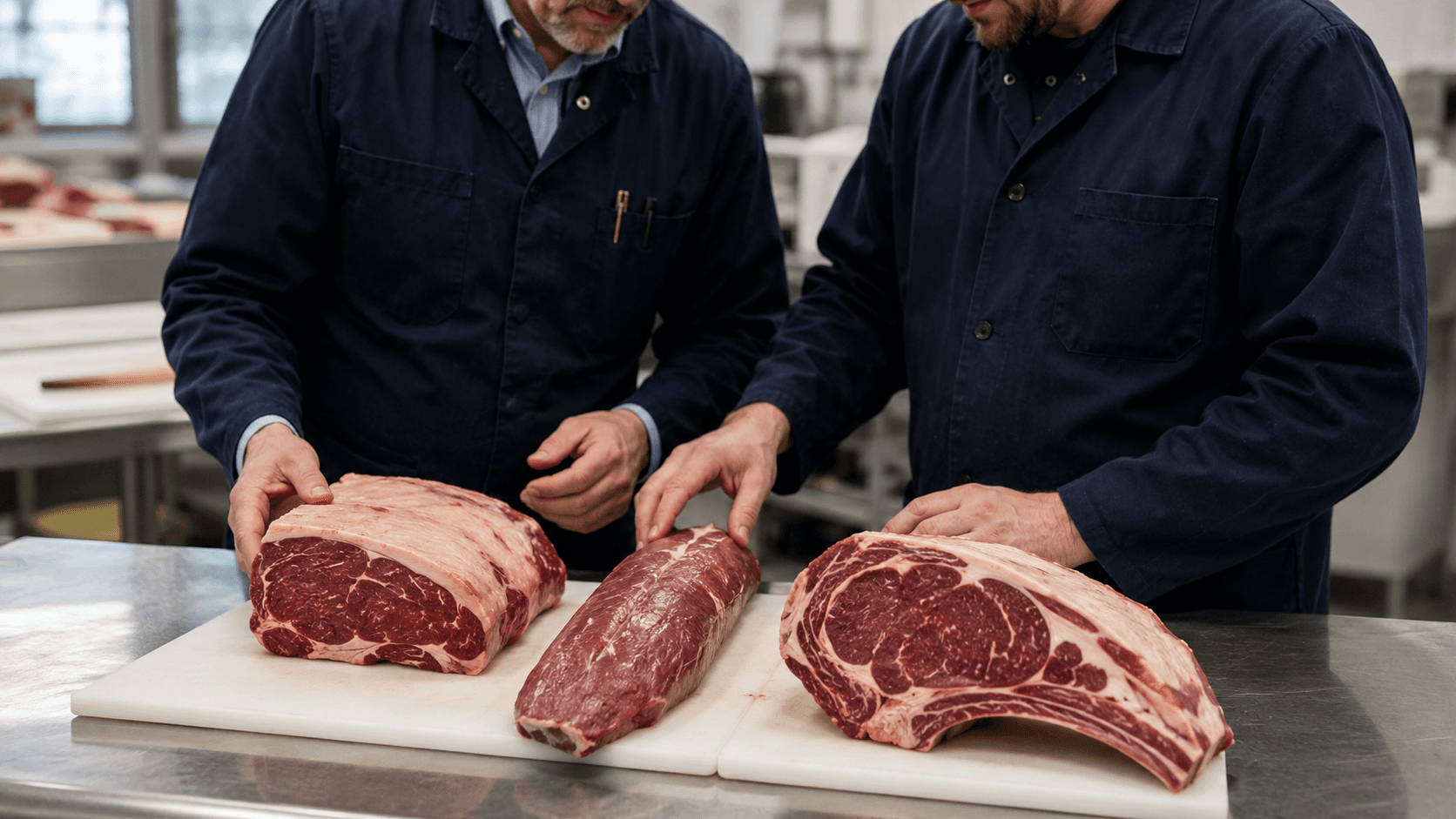
Technical Starting Point
Visible characteristics, origin, and process information go hand in hand. Only then can a well-founded assessment of quality be made.

Classify by animal species, animal category, and origin.
Evaluate color, fat, fiber, and texture together.
Distinguish between fundamental quality defects and typical product characteristics.
Distinguish between maturity level and product status; identify potential errors.
Compare and describe the aroma, texture, and finish in technical terms.
Explain and justify differences in quality in a clear and understandable way.
Product knowledge becomes practical
More than just knowledge: Confidence in statements, advice, and decisions.
Wet and Dry Aging: Understand the processes, flavor development, and texture formation; assess their effects and limitations; identify aging defects.
Calculate aging losses and provide a plausible explanation for price differences based on value creation—as a foundation for Wagyu, Ibérico, and dry aging.
Distinguish between different types of customers and their expectations; answer customer questions without resorting to myths; handle objections professionally. Explain what “premium” means in a factual way—without exaggeration.
The goals are clearer management of expectations, transparent advice, and a more consistent team language. Management and sales work together to make well-founded, more reliable decisions regarding quality and product assortment for day-to-day operations.
Color alone is not an indicator of quality. Product condition, aging, and other characteristics also play a role.
The fat content and fat distribution must be appropriate for the product and its intended use.
Red meat juices are not the same as blood. Color alone is not a reliable indicator of how well the meat is cooked.
Structure of the Format
Practical product evaluations, sensory comparisons, and consulting situations: applicable skills rather than video consumption.
Definition → Characteristics → Failure Patterns → Technical Applications
Classify and compare; apply to the product line and customer consultation.
Identify defects; justify cutting decisions and quality determinations.
Assess the degree of ripeness and identify defects; determine product selection and preparation.
Compare and describe; translate for the front desk, the team, and the classroom.
Calculate shrinkage; explain product value and price differences at the point of sale.
Identify customer types, handle objections; provide expert advice.
Digital materials supplement preparation, in-depth study, and follow-up—this is not a standalone online course. Practical application ranges from product evaluation and cutting to consultation, preparation, and instruction.
Proficiency Exam and Graduation
The certificate is awarded upon successful completion of the competency exam. The exam assesses technical classification, quality assessment, and application.
License, Instructors, and Use
For butchers, the food industry, food retailers, specialty retailers, and product managers: Selling, categorizing, explaining, and taking responsibility for meat.
Structured Onboarding for New Employees and Career Changers: Standards for Consultation, Customization, and Quality Assurance. Confidently explain quality, aging, and preparation at the counter.
For technical schools, academies, barbecue schools, associations, and educational partners: a standalone certification or part of a program series.
For chains and regional organizations, even across multiple locations: transparent, verifiable standards for teams, stores, and product assortments.
Partner instructors may only conduct the program after completing the mandatory M.E.A.T. orientation or Train-the-Trainer certification.
For trainers, teachers, and those responsible for training and facility management.
M.E.A.T.
Licensing Partner
Internal guidelines and product line adjustments are possible project-specific additions, not blanket licensing services. The scope and adjustments will be clarified during the discussion.
Framework and Collaboration
Whether it’s independent certification, a company standard, or a long-term educational partnership: the scope of the license, the organizational framework, and any necessary adjustments will be discussed with your organization.
This format is intended exclusively for commercial and institutional clients.